
Printed Source
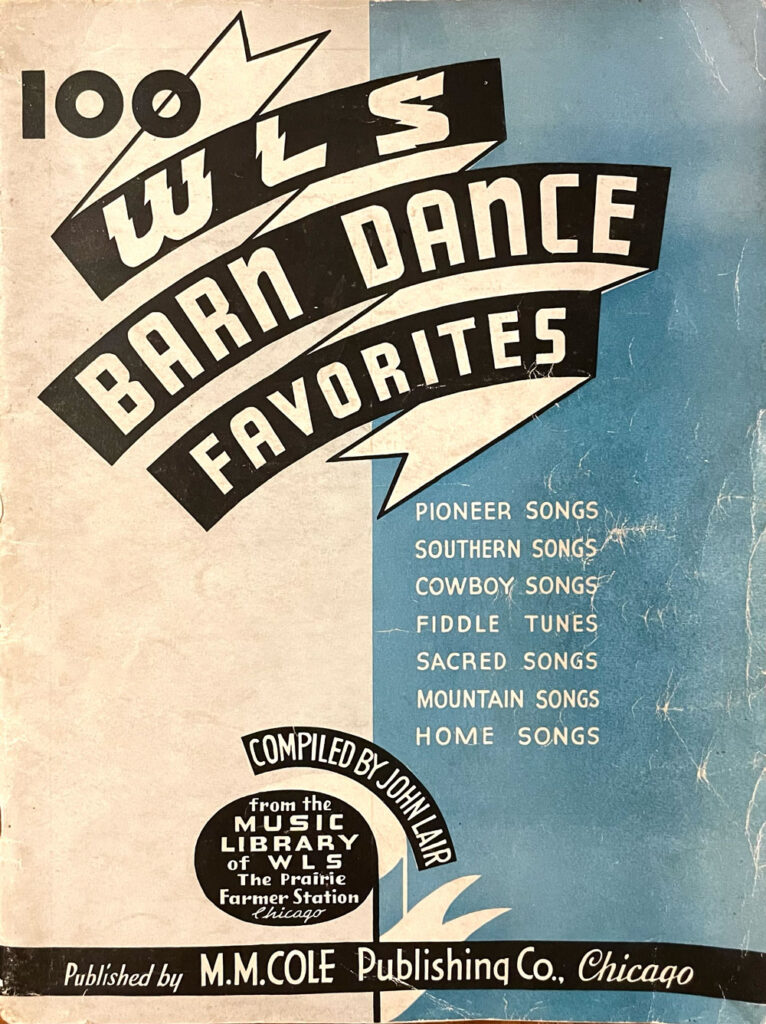
100 WLS Barn Dance Favorites
- Arkansas Travelerp. 93
- Buffalo Galsp. 89
- Bury Me Beneath The Willowp. 2
- Cackling Henp. 93
- Climbing Up the Golden Stairsp. 84
- Come Back to Erinp. 41
- Cowboy Jackp. 77
- Devil's Dreamp. 91
- Durang's Hornpipep. 89
- Footprints In The Snow
- Frog He Went A-courtingp. 19appears as Froggie Went A'Courtin'
- Girl I Left Behind Mep. 90
- Going to Bostonp. 94
- Grey Eaglep. 90appears as Gray Eagle
- Home Sweet Homep. 95
- I Wish I Was Single Againp. 47appears as I Wish I Were Single Again
- I'll Take You Home Again Kathleenp. 9appears as I'll Take You Home Again, Kathleen
- Irish Washerwomanp. 88
- Leather Britchesp. 91appears as Leather Breeches
- Lorenap. 51
- Miller Boyp. 94
- Miss McCloud's Reelp. 85appears as Miss McLeod's Reel
- Old Brass Wagonp. 94
- Pop Goes The Weaselp. 92
- She'll Be Comin' Round the Mountainp. 87
- Silver Threads among the Goldp. 50
- Single Girlp. 45
- Skip-To-My-Loup. 94appears as Skip To My Lou
- Soldier's Joyp. 92
- Starry Night for a Ramblep. 24
- Sugar Babep. 33
- Sweet Evelinap. 27appears as Sweet Evalina
- Wait for the Wagonp. 37
- Yellow Rose of Texas